You've got the rice, spices, and recipe — but which mutton cut makes the best biryani? Get it wrong and even the best recipe falls flat. Here's the simple guide.
 By Chennai Meats
You've got the rice, the spices, and the recipe. But stand at the meat counter and one question stops everyone: which mutton cut actually makes the best biryani? Get this wrong and even the best recipe falls flat. Here's the simple guide.
For an authentic dum biryani, you want bone-in pieces — the bone releases flavour and marrow into the rice as it slow-cooks. The two best choices are the dedicated Biryani Cut (large pieces from shoulder, neck, and ribs) and the Leg Cut (meatier, larger pieces). Both hold their shape through the long dum process.
100% halal certified, delivered fresh by 7–11 AM
Boneless mutton cooks faster and can turn dry and stringy during the long dum. Bone-in pieces stay juicy — the bone and connective tissue break down slowly, basting the meat from inside and infusing the rice with deep flavour. This is why every legendary biryani house uses bone-in mutton.
Cut specifically for biryani from the shoulder, neck, and rib area. Large enough to stay juicy, with the perfect meat-to-bone ratio. If you want a no-brainer, this is it.
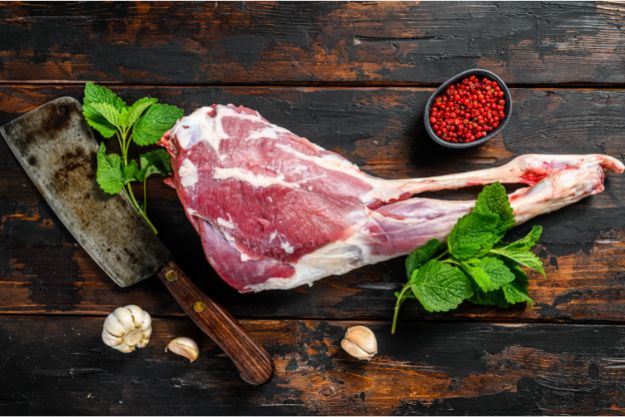
The meatiest part of the goat. Choose this if your family prefers more flesh on each piece. Slightly firmer, so it needs good marination.
Well-marbled and full of flavour, the shoulder becomes beautifully tender with slow cooking. A great alternative to biryani cut.
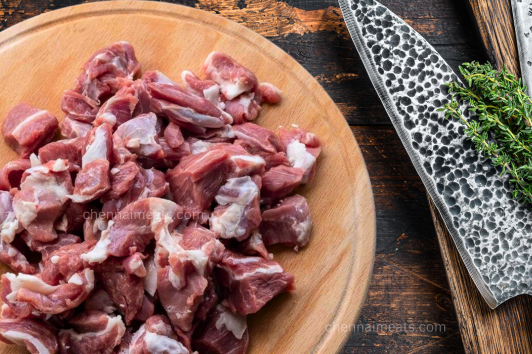
Smaller pieces work if you want more portions or a quicker cook, but they can overcook in a full dum. Better suited to kuzhambu.
Halal certified, fresh cut, delivered before breakfast. Free delivery across Chennai.
A good rule is 200-250g of bone-in mutton per person. So a 750g pack comfortably serves 3-4 people. For a family gathering of 8, order around 1.5-2kg (2-3 packs). Always marinate for at least 2-4 hours — overnight is best — with curd, ginger-garlic, and biryani masala for maximum tenderness.